
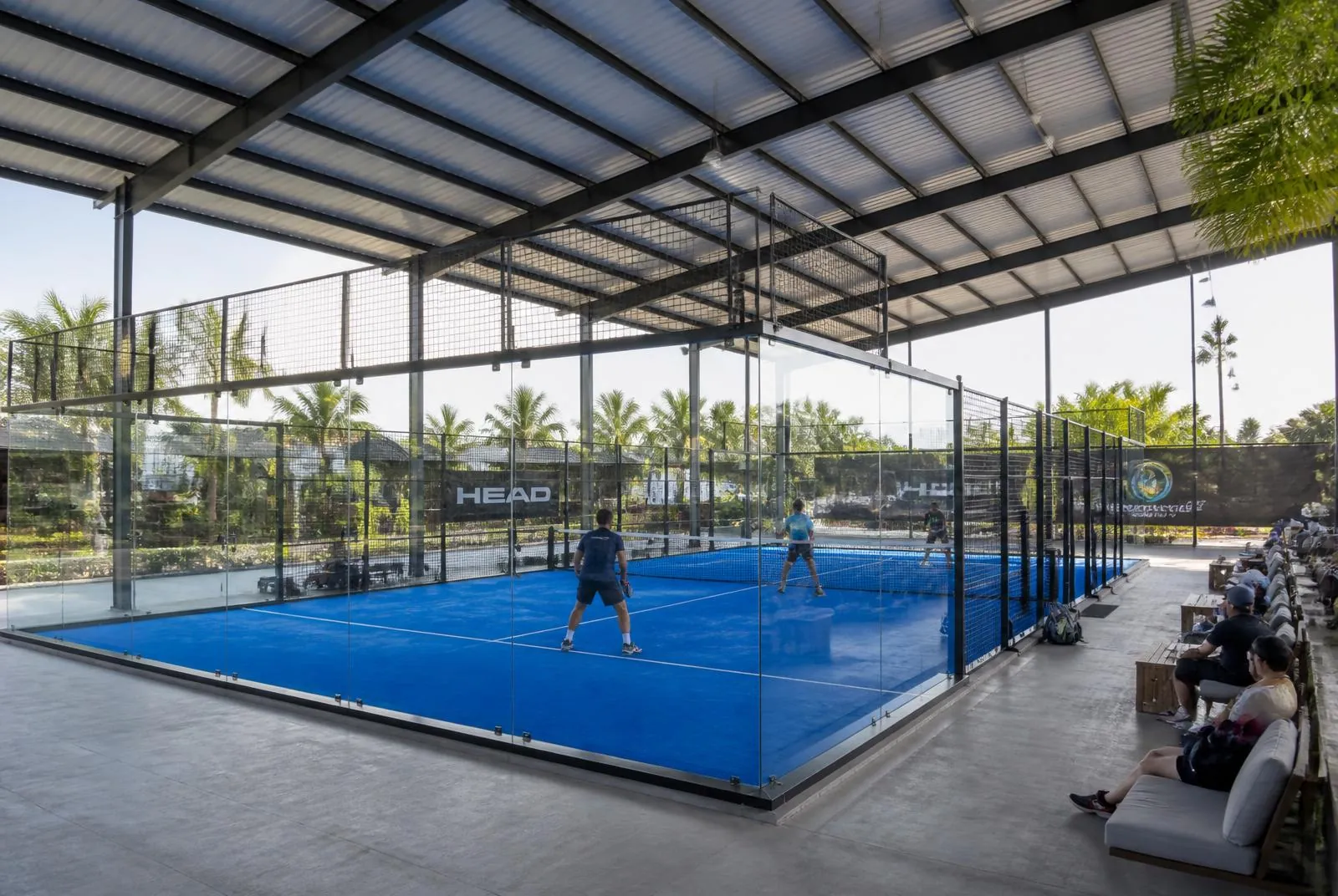
How to Use the Walls in Padel
The glass walls are what make padel unique. Here's how to read, play, and weaponise them.
SOLO TRAVELLER. SOCIAL PADEL.
No padel partners? No problem. Join the Padel Tropical community, find players at your level and get on court.
The walls are what make padel unique. They're not obstacles — they're extensions of the court, tactical tools, and the reason padel rallies are longer, more creative, and more dramatic than any other racket sport. Learning to use the walls transforms padel from a game of hitting back and forth into a three-dimensional chess match where angles, timing, and anticipation matter more than raw power. Here's how to read, play, and weaponise the walls.
The back wall: your safety net
The back wall is the most important wall in padel. When your opponent hits a hard shot that bounces deep, instead of lunging desperately, you can wait for the ball to come off the back glass and play it calmly. The back wall turns impossible retrieves into routine shots — but only if you learn to read the bounce.
The key is positioning. When you see a deep shot coming, resist the urge to stand at the bounce point. Instead, move behind where you expect the ball to rebound from the glass. This gives you space to step forward into the shot, which is far more natural than reaching backward.
The ball's speed and angle into the glass determine how far it rebounds. A hard, flat shot bounces back further than a slow, angled one. With experience, you'll read this instinctively — but in the beginning, always err on the side of giving yourself too much space rather than too little.
The side walls: angles and surprises
The side walls add a lateral dimension to padel that doesn't exist in any other racket sport. Balls that hit the side glass after bouncing can be played — and they often create awkward, unexpected angles that catch opponents off guard.
Playing a ball off the side wall requires you to adjust your body position quickly. The ball changes direction, so you need to reposition your feet and racket face to redirect it where you want. The most common side-wall play is in the back corners, where the ball bounces and then hits the side glass (or hits the side glass first, then bounces).
Attacking with the side walls is an advanced skill. By hitting a sharp cross-court angle, you can make the ball bounce and kick off the side glass away from your opponent, making the return extremely difficult. This works especially well on volleys from the net.
Corner play: where it gets interesting
The corners — where the back wall meets the side walls — are padel's most challenging zones. Balls that hit the corner can bounce in unpredictable directions, and reading the rebound requires experience and quick footwork.
The general rule for corner bounces: if the ball hits the back wall first and then the side wall, it rebounds toward the centre of the court. If it hits the side wall first and then the back wall, it stays closer to the side. Knowing this pattern helps you anticipate where to position yourself.
Don't try to be a hero in the corners. If the bounce is difficult, play a safe, high return — a defensive lob or a soft shot down the middle. The corner is where unforced errors happen, and experienced opponents deliberately aim for corners to provoke mistakes.
Playing the ball after two walls
In padel, the ball can hit multiple walls on your side before you play it — as long as it only bounces on the ground once. A ball that bounces, hits the back wall, then hits the side wall is still live. A ball that bounces, hits the side wall, then the back wall is also live. You can even play a ball after it bounces and hits the back wall and comes all the way back past the service line.
These multi-wall bounces create spectacular retrievals and are one of the things that make padel so exciting to watch and play. The key is patience: watch the ball through its entire trajectory, position yourself for the final rebound, and play your shot with composure.
Using walls offensively
Walls aren't just for defence. Experienced players deliberately use wall angles to create attacking opportunities. A deep cross-court shot that bounces into the back corner forces your opponent into a difficult wall return, often giving you a weak ball to attack at the net.
Smashes aimed at the side wall, if angled correctly, can bounce in directions that are nearly impossible to return. These 'double-bounce' smashes — where the ball bounces on the ground and then kicks off the side wall away from the opponent — are among the most effective winners in padel.
At Padel Tropical, our coaching sessions include dedicated wall-play drills. We start with back-wall basics, progress to side-wall play, and then work on reading corner bounces. Once you're comfortable with the walls, padel becomes a completely different — and much more enjoyable — game.
The mental shift
The biggest challenge with wall play isn't physical — it's mental. Tennis, squash, and every other racket sport train you to react immediately when the ball comes toward you. Padel asks you to wait. To let the ball travel past you, hit the wall, and then play it. This patience is counterintuitive and takes practice.
Trust the walls. They're not your enemy — they're the best partner you have on court. Every ball that hits the wall is a second chance, an extra moment to set up your shot, and an opportunity your opponents don't want to give you. Learn to use them and you'll understand why padel players never go back to other racket sports.
Padel Tropical is the home of padel in Koh Samui. Book a beginner-friendly padel lesson in Koh Samui with a certified coach, or reserve a slot directly through our padel court rental in Koh Samui page. Looking for community? Join one of our weekly padel tournaments.