Padel vs Pickleball: Which Should You Try?
Two of the world's fastest-growing racket sports compared — court, rules, difficulty and fun factor.
SOLO TRAVELLER. SOCIAL PADEL.
No padel partners? No problem. Join the Padel Tropical community, find players at your level and get on court.
Padel and pickleball are the two fastest-growing racket sports in the world — and they couldn't be more different. Both have exploded in popularity over the last five years, both attract beginners with their accessible learning curves, and both have passionate communities that insist their sport is the superior choice. So which one should you try? Here's an honest, detailed comparison from every angle.
The courts
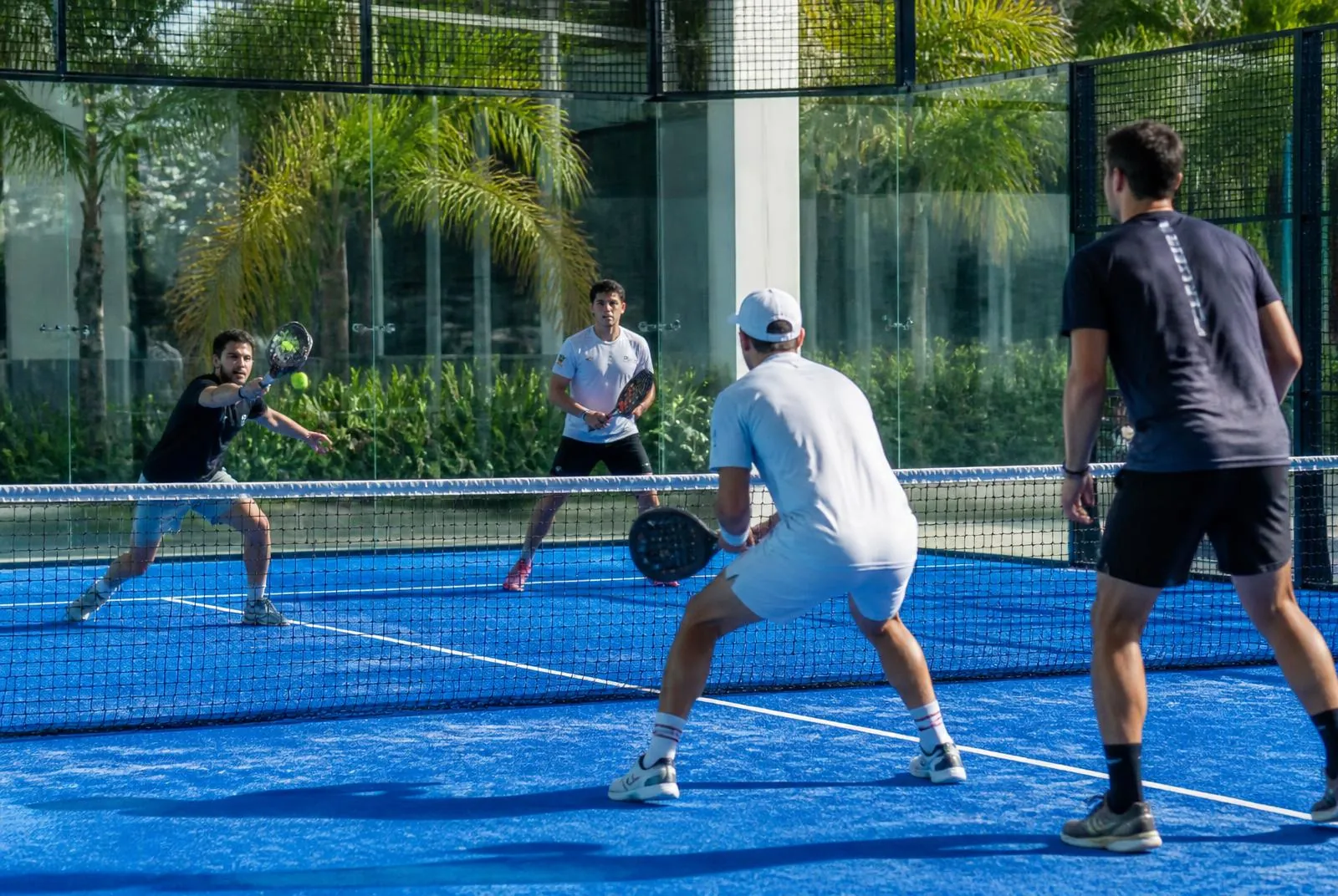
A padel court is 20m × 10m, enclosed by glass walls and metallic mesh. The walls are part of the game — the ball can bounce off your own back wall and side walls, and you can play it. This creates a three-dimensional playing field that adds tactical depth and keeps rallies alive.
A pickleball court is 13.4m × 6.1m — significantly smaller than a padel court and roughly the size of a badminton court. It's open (no walls), with a net that's 91.4cm at the centre. There's a 'no-volley zone' (the kitchen) — a 2.1m area on each side of the net where volleys are prohibited.
The court difference is the fundamental distinction. Padel's walls make it a unique sport with tactics that don't exist in any other game. Pickleball's open court and kitchen rule create a different kind of strategy — more about dinks, resets, and patience at the net.
The equipment
Padel rackets are solid (no strings), typically made of carbon fibre or fibreglass, with a foam core and holes drilled through the face. They weigh 340 to 390 grams and come in three shapes: round (control), teardrop (balance), and diamond (power). Padel balls are pressurised, similar to tennis balls but with slightly less pressure for a lower bounce.
Pickleball paddles are smaller and lighter — typically 200 to 250 grams — made of composite materials with a honeycomb core. The ball is a perforated polymer sphere (a wiffle ball, essentially) that moves much slower than a padel or tennis ball. This slower ball speed is one reason pickleball is considered highly accessible for older players.
Learning curve and accessibility
Both sports are genuinely beginner-friendly, but in different ways. Padel's underhand serve, forgiving walls, and doubles format mean most beginners are rallying within 20 minutes. The walls initially confuse newcomers but quickly become an advantage — they give you extra time and extra chances to return the ball.
Pickleball's smaller court, lighter paddle, and slower ball make it physically less demanding, which is why it's extremely popular with older adults and people recovering from injuries. The rules are simple, the learning curve is gentle, and you can play a competitive game within your first hour.
Where they differ is in depth. Padel's wall play, overhead shots (bandeja, vibora), and three-dimensional tactics give the sport a much deeper skill ceiling. Players who've been playing padel for years are still learning new techniques and tactical nuances. Pickleball's skill ceiling, while real, is generally considered lower — the sport rewards consistency and patience more than technical mastery.
The social factor
Both sports are social. Both are typically played in doubles. Both generate the kind of laughter and camaraderie that build friendships. The difference is cultural rather than structural.
Padel culture leans European and Latin American. The post-match beer, the club atmosphere, the competitive tournaments, and the social WhatsApp groups create a community that revolves around the club. Padel clubs tend to be gathering places — not just courts.
Pickleball culture leans North American. Community centres, public parks, and retirement communities are the typical settings. The culture is welcoming, inclusive, and often oriented around social play rather than intense competition. The growth of pickleball in the US and Canada has been particularly strong among retirees and active older adults.
Physical demands
Padel is more physically demanding. The court is larger, the ball moves faster, and the overhead shots require significant shoulder and core strength. A 90-minute padel session burns 500 to 800 calories and provides a genuine full-body workout.
Pickleball is lighter exercise. The smaller court, slower ball, and absence of overhead power shots mean less running and less physical strain. A typical pickleball session burns 300 to 500 calories. This lower intensity is a feature, not a bug — it allows players to enjoy the sport for longer without excessive fatigue or injury risk.
For athletes or fitness-minded players, padel provides the better workout. For players seeking a social, low-impact activity, pickleball is the gentler option.
Which should you try?
If you're in Koh Samui, the answer is easy: try padel. Padel Tropical offers five professional courts, coaching for all levels, and a thriving community. Pickleball has a smaller presence on the island, and the infrastructure and culture aren't as developed.
More broadly: try both if you can. They're different enough that enjoying one doesn't mean you won't enjoy the other. Many athletes play both. But if forced to choose, consider what you value most. If you want depth, athleticism, and a club-based community, choose padel. If you want accessibility, lower physical demand, and a sport you can play well into your 70s, choose pickleball.
At Padel Tropical, we welcome players from every racket sport background — tennis, squash, badminton, pickleball, or complete beginners. The common thread is the discovery that padel is something special. Come try it and see for yourself.
Padel Tropical is the home of padel in Koh Samui. Book a beginner-friendly padel lesson in Koh Samui with a certified coach, or reserve a slot directly through our padel court rental in Koh Samui page. Looking for community? Join one of our weekly padel tournaments.